Virginia Kettle, with John Kettle
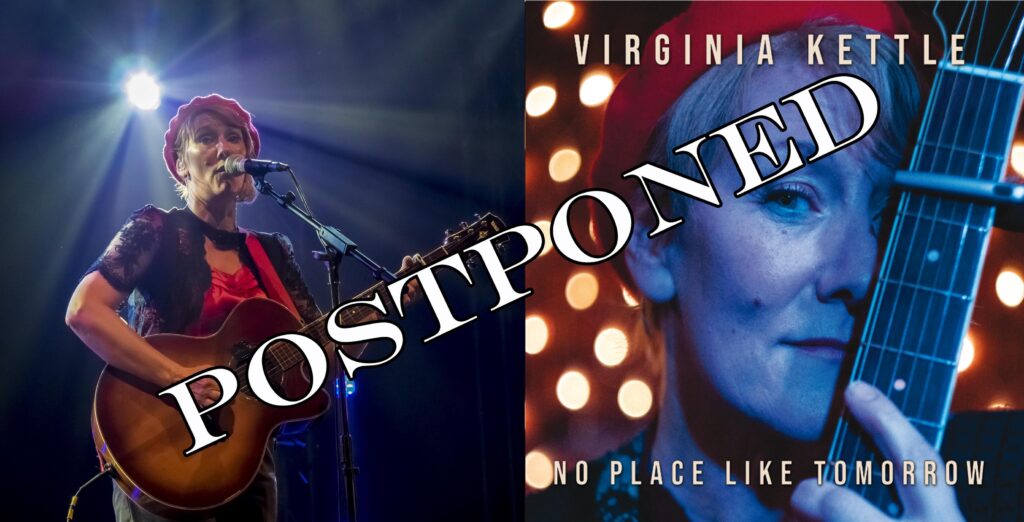
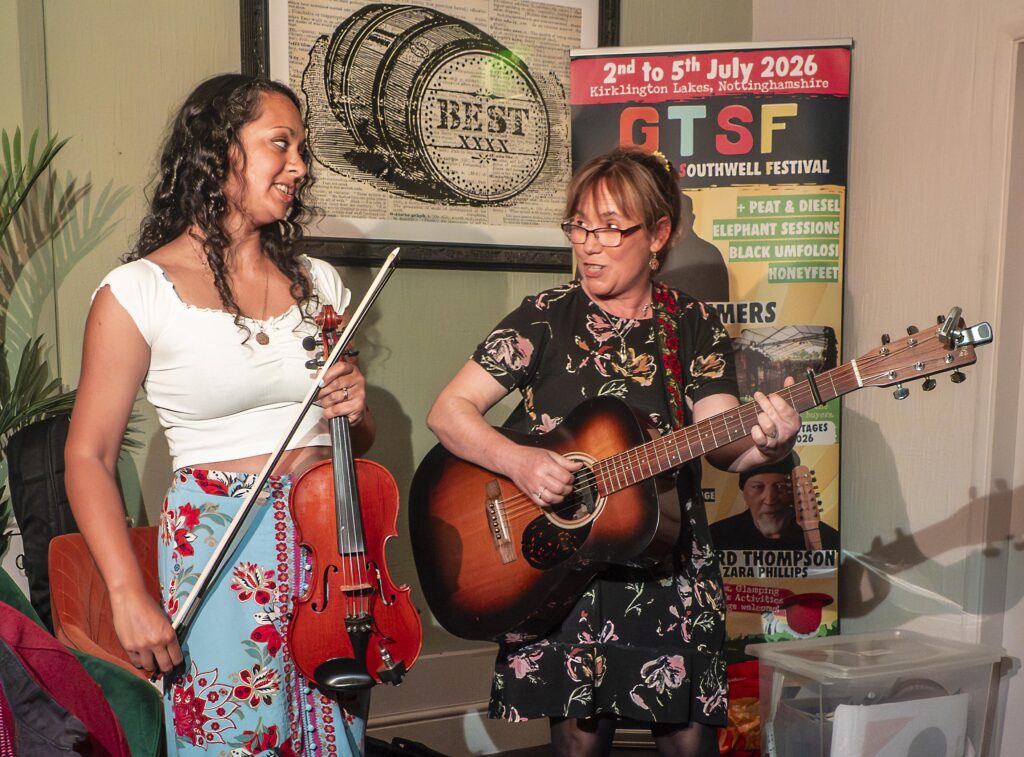
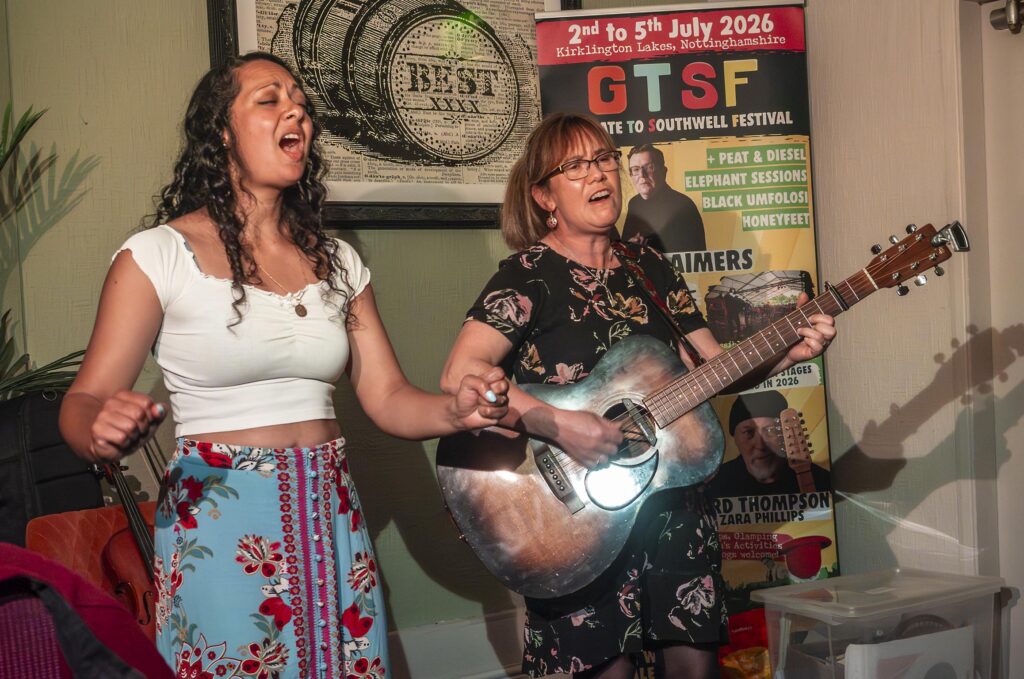
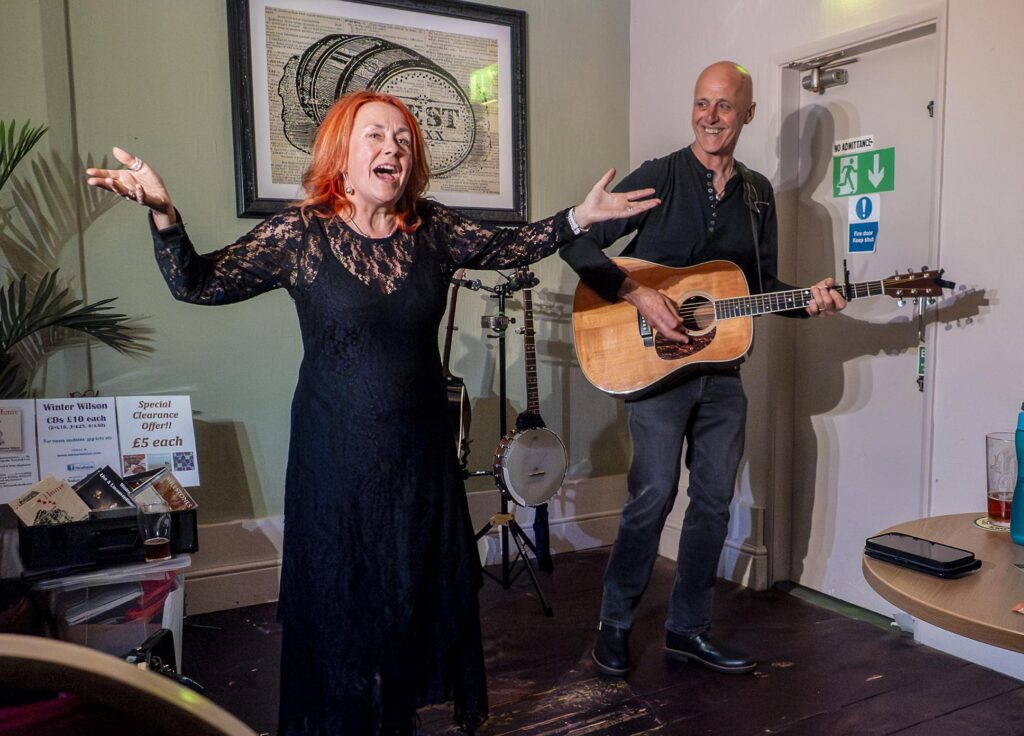
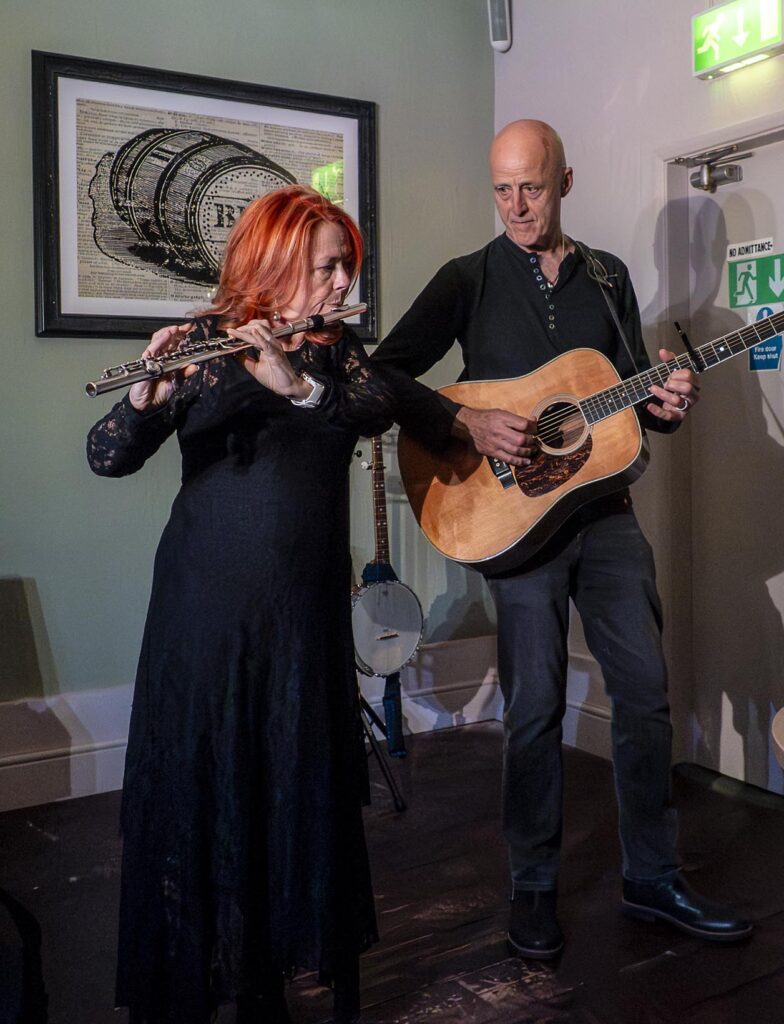
Our guest on October 7th was Virginia Kettle, one of the two lead singers, and one of the songwriters, in the festival favourites Merry Hell. For Carrington she performed with her husband John Kettle, also from Merry Hell.
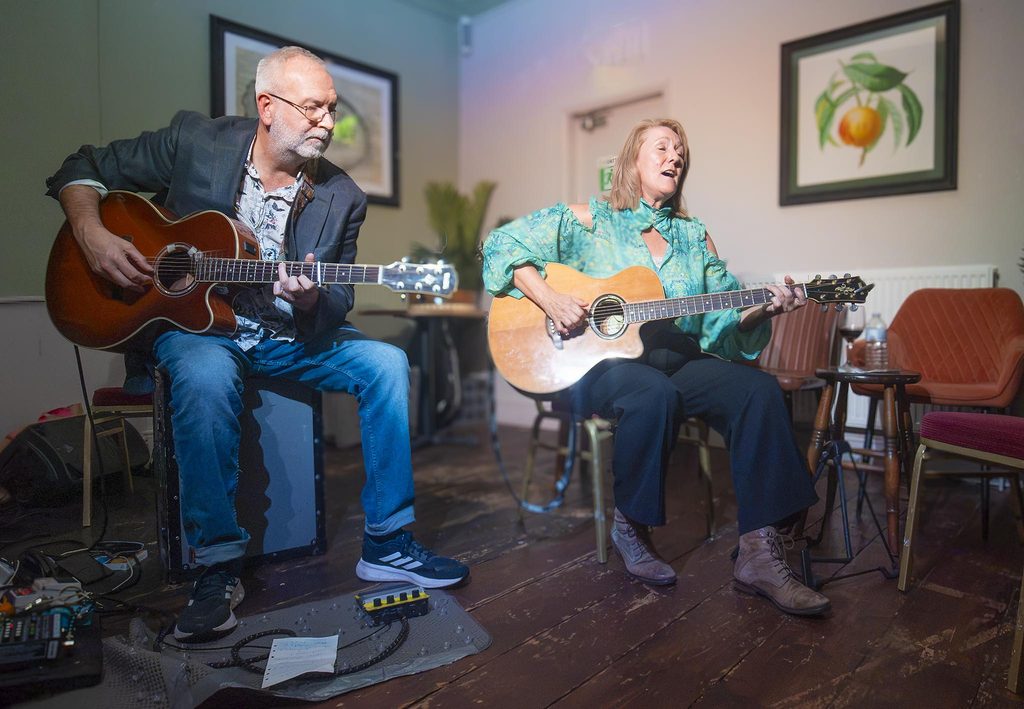
The first thing to say about Virginia is that she is a splendid performer with compelling stage presence and an immediate connection with the audience. She talked with us (not at us) about the origins and ideas of most of the songs with quiet, cheerful intensity. Her singing is great, of course, with wit and intelligence, but she is also able to pick up the enthusiasm and enjoyment of the audience and radiate it back with increased intensity. Her performance of Box of Diamonds near the end of the evening was a completely convincing ‘knock ’em down, drag ‘em out’ piece of bravura – not usual in a folk club, but it seemed just right.
John backed her up splendidly, with delicate guitar breaks when she gave him the nod. He sang two songs: the first-time-in-public Searching for Something I Cannot Own, and Merry Hell’s Lean On Me, which he wrote a long time ago during a lonely spell working as a songwriter in Nashville. I really like Lean On Me – the all-purpose support and comfort song (I sing it myself) – but I’d never heard John sing it, and it was moving against that backstory. It would have been good to hear more from John, but that would have meant less from Virginia, of course.
It’s unusual for me to review a session by a singer-songwriter. I’m not enthusiastic about most modern-composed ‘folk’ songs BUT I feel differently about Virginia’s songs. They’re not ‘folk’ for a start: they are quite personal. But personal in a way which involves us with her and reflects on our shared lives. In her songs, the world is tough and difficult (and sometimes our own personalities, too), but there is plenty of opportunity for hope, comfort, amusement – and sometimes joy. The effect of an evening of her songs is uplifting and encouraging.
[She also sings very clearly, so I could understand every word: appreciated by an old reviewer.]
Her songs cover a wide range of topics in a wide range of styles, and she’s good with words: mostly her lyrics sound like ordinary speech which just happens to fit the song (which is difficult to do), but there are occasional brilliant flashes like
‘Her friend Patricia, who looked like Morticia, and his friend John, who didn’t look like anyone’
(I like the rhythm change)
or ‘…holding it all together with the string from your vest’.
She sang a mix of songs from Rolling Folk (Virginia, John, Mark Wooley, Chris Lee, and Clare ‘Fluff’ Smith), from her solo record (No Place Like Tomorrow), and some from Merry Hell. There were several newly-composed, unrecorded songs. For two of the songs it was their first public performance.
There were songs about the joy and support of friendship: Rosanna’s Song and Lighter Shade of Blue; the importance of getting on with things, especially love, in later life: Tomorrow is not Promised and When You Know You Know; self-direction and recognizing self-worth: Sailing on the Inside, Made in the Stars and Box of Diamonds; and stories just there to be entertaining: Spy in a Previous Life.
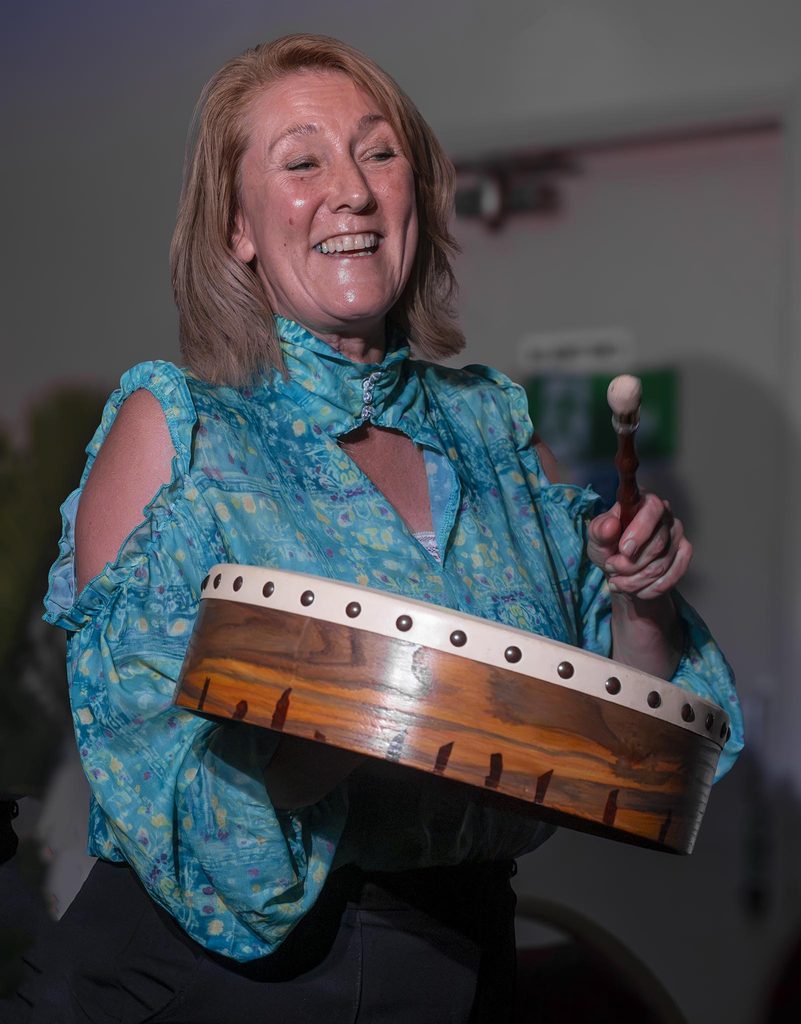
For those of us who have been following Merry Hell for years there were several songs besides Rosanna’s Song, such as Don’t Say I, Say Us, reflecting Merry Hell’s continuing concern with solidarity over individualism. Here she successfully got what she rightly called ‘the small, compact and bijou’ audience singing three-part backing vocals to her lead. Carrington audiences should be proud of the quality of their chorus singing, both in volume and in musicality, and Virginia appreciated our support.
From Merry Hell there were also Build a Mansion (about what really matters in love) and The Butcher and the Vegan (a song of peaceful co-existence which includes accurate oystercatcher description). She ended with Bury Me Naked, an old favourite which she said was originally inspired by a Buddhist retreat, with its warning against accumulating ‘more shoes than anyone could possibly wear in one lifetime’. We all joined in.
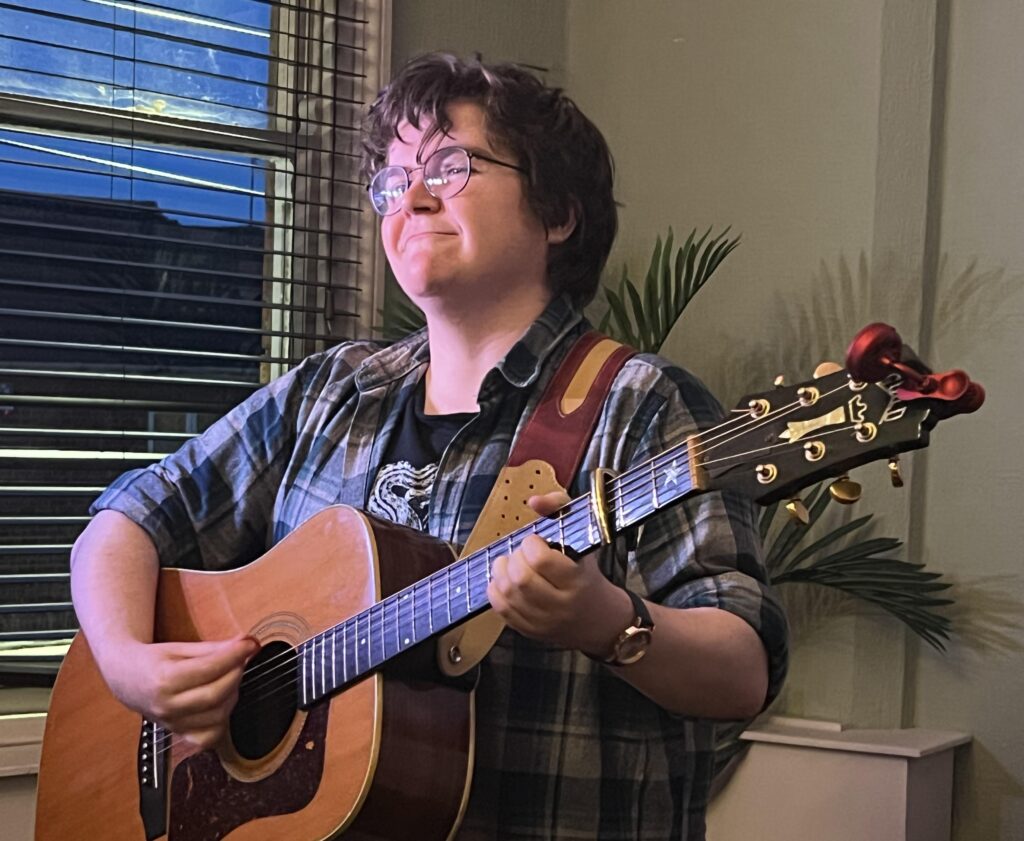
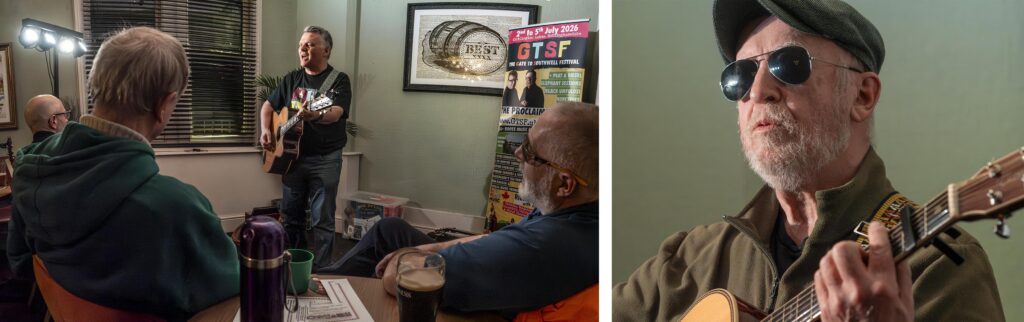
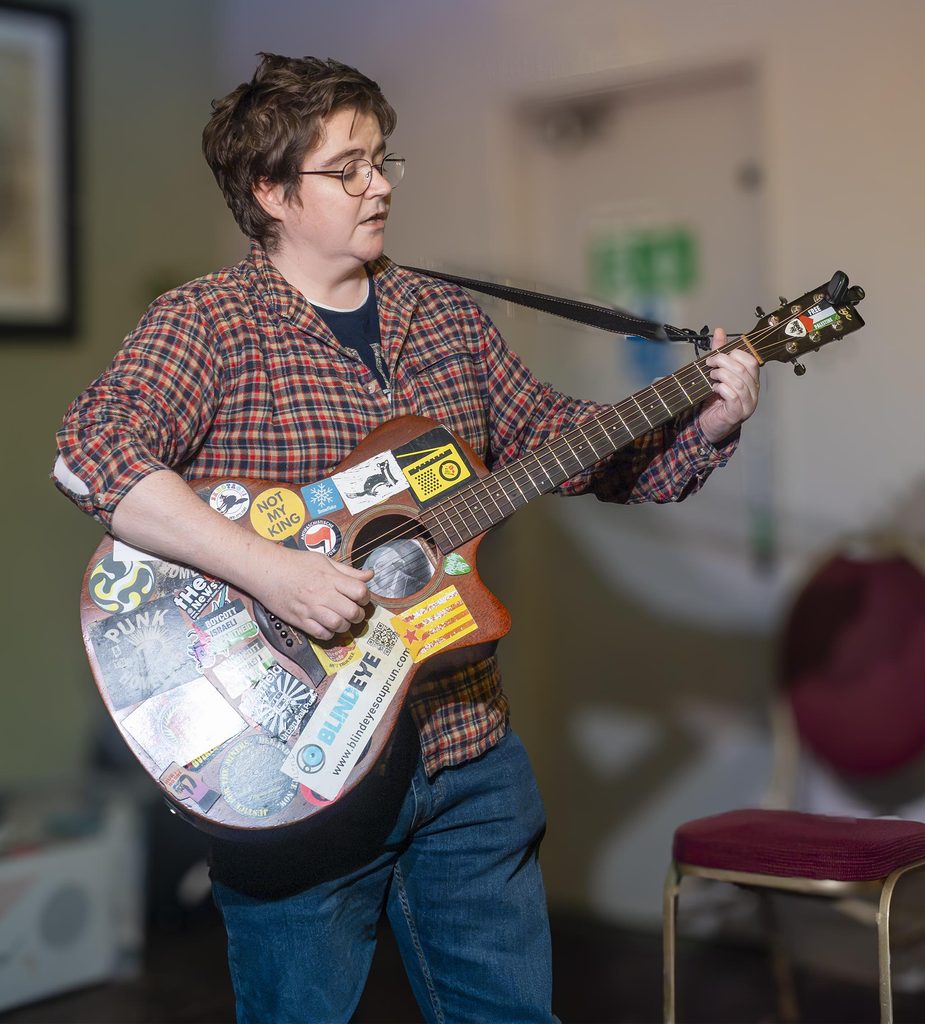
We had some good performances from floor singers, as usual. I particularly liked Sarah Farrell’s beautifully quiet version of Don’t Sing Love Songs/Silver Dagger.
A splendid evening: if you weren’t able to make it, you missed out.
Hugh Miller
Our next guests are Mick Ryan and Paul Downes on 28th October.
There are singarounds on all non-guest Wednesdays.